

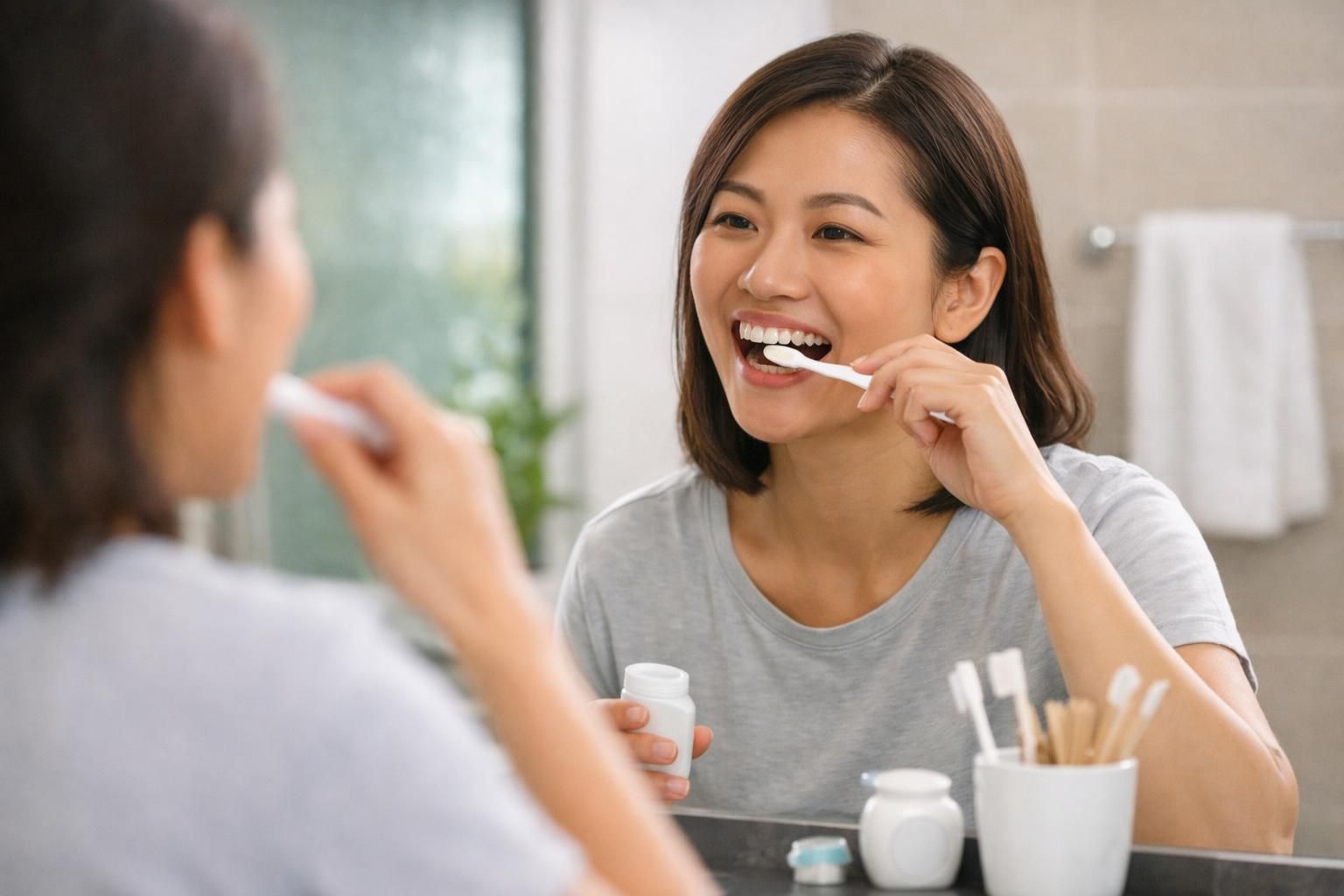
It is easy to focus on the front teeth when brushing because they are the ones seen in the mirror. However, a thorough routine also includes the inside, outside and chewing surfaces of every tooth. Making a few small adjustments can help turn a quick brush into a more complete twice-daily habit.
Why brushing every surface matters
Plaque is a film of bacteria that can build up when teeth are not cleaned properly. It contributes to tooth decay and gum disease. The NHS advises brushing twice a day with fluoride toothpaste for about two minutes each time, with one session taking place last thing before bed. Both manual and electric toothbrushes can be effective when all tooth surfaces are cleaned and fluoride toothpaste is used.
For further guidance, see the NHS guide to keeping teeth clean.
A simple two-minute approach
A timer can make it easier to give each area enough attention. At home, try dividing the mouth into manageable sections rather than brushing only where it is most visible.
- Start with the upper teeth: clean the outer surfaces, then the inner surfaces and chewing surfaces.
- Repeat for the lower teeth: work through the outer, inner and chewing surfaces.
- Slow down at the back: back teeth can be easy to miss, especially their inner and chewing surfaces.
- Use the full two minutes: a phone timer or toothbrush timer may be a useful prompt.
Fit the routine into an ordinary day
A rushed morning before commuting can still be a useful time for a thorough brush. Keeping your toothbrush somewhere easy to reach may help make the habit more convenient. If mornings are busy, aim to make the bedtime brush the more unhurried session, as it should be done last thing before bed.
After brushing, spit out excess toothpaste rather than rinsing straight away with water. Immediate rinsing reduces the fluoride left on the teeth. If you use a fluoride mouthwash after lunch at work, consider using it at a separate time from brushing rather than immediately afterwards.
Remember between the teeth
A toothbrush may not reach every space between teeth. Daily cleaning between teeth with floss or an interdental brush can remove food debris and plaque from these areas. The option that feels practical and comfortable is more likely to become part of a regular routine.
A small routine with a wider reach
Two minutes, twice a day, can be a straightforward opportunity to clean more than the teeth at the front. A consistent sequence can help ensure that the less visible surfaces receive attention too. For more general health information, visit ISAW Medical.
This article is for general education and does not replace personalised advice from a qualified healthcare professional.