

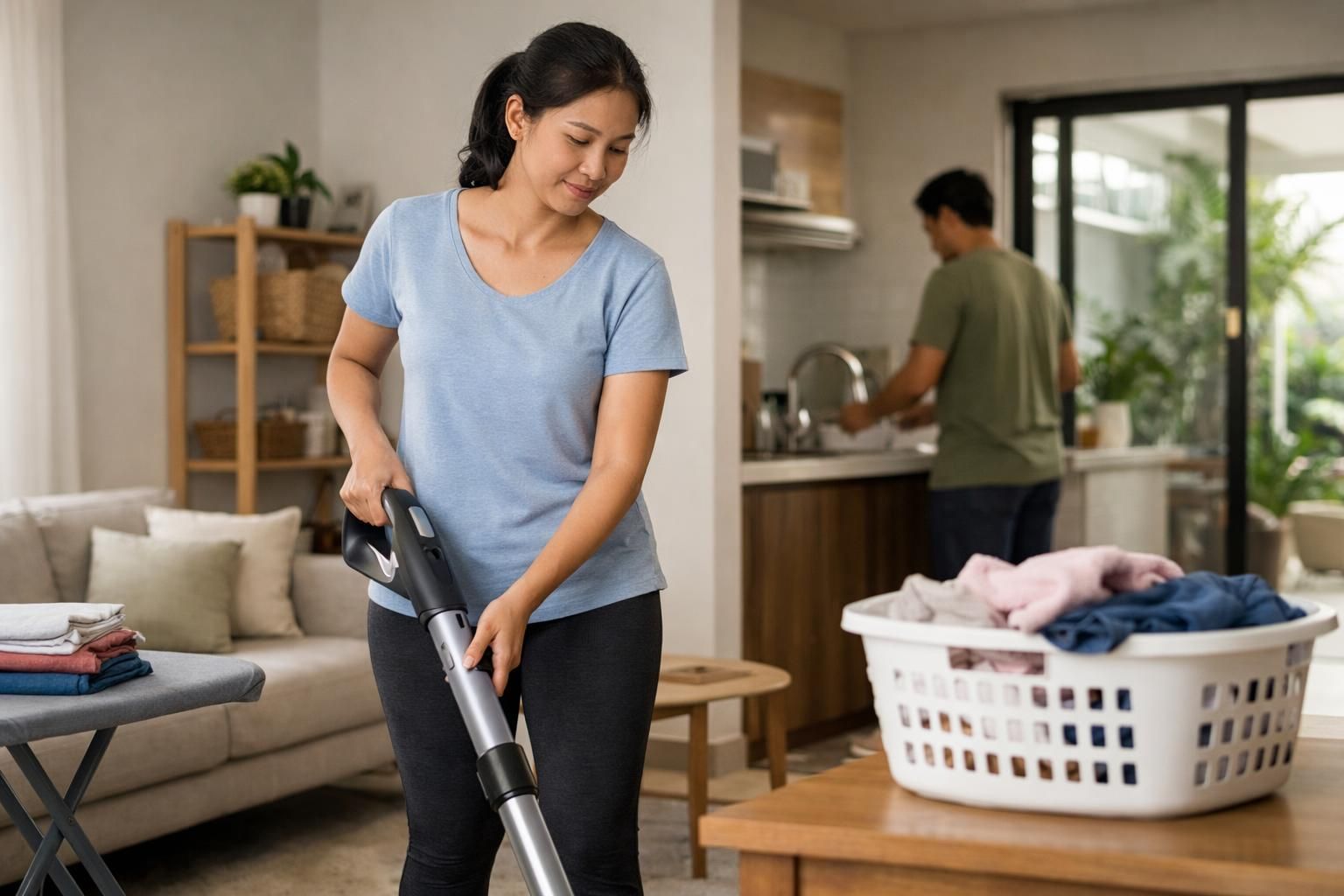
It is easy to think that physical activity only counts if it happens at a gym, during a run or in an organised class. In fact, everyday movement matters too. Household chores may not feel like exercise, but they can be part of the movement already built into your day.
What counts as physical activity?
The World Health Organization (WHO) defines physical activity as bodily movement produced by skeletal muscles that uses energy. It includes movement during leisure, travel, work and domestic activities, so it is not limited to sport or planned workouts. WHO also notes that moderate- and vigorous-intensity activity can improve health and wellbeing, that any amount of activity is better than none, and that adults should limit sedentary time.
In other words, sweeping the floor or carrying laundry can count as physical activity because you are moving. That does not mean every chore has the same intensity or replaces a specific exercise plan. Instead, it is a helpful reminder to notice the movement you already do and look for comfortable ways to add more. Read the WHO physical activity fact sheet for the source guidance.
Notice movement at home
Many domestic tasks involve standing, walking, reaching, lifting or bending. Sweeping, mopping, tidying rooms, carrying a laundry basket, washing up and gardening are ordinary examples. Rather than judging whether a task was done perfectly, recognise it as one opportunity to spend less time sitting.
- Break up a long period on the sofa or at a desk by putting away a few items.
- Walk around the home while doing small tasks, such as gathering laundry or watering plants.
- Choose tasks that suit your comfort, abilities and available time.
Add movement around work and errands
Household activity is only one part of an active day. At work, you might take a brief walk to speak with a colleague instead of sending a message, or use the stairs when it is suitable for you. When visiting a shop or running an errand, walking part of the route can be another practical option. These are not rules to follow perfectly; they are small chances to move more in everyday Malaysian routines.
Make the evening routine more enjoyable
If chores feel repetitive, try pairing a task with music or a podcast you enjoy. Folding clothes, wiping surfaces or preparing the home for the next day may feel more pleasant when linked with something entertaining. The aim is not to chase a calorie target, but to make regular movement feel more achievable.
A useful shift in perspective
Gym sessions, walking, cycling, recreation and sport can all be valuable ways to be active. Household chores belong in the wider picture too. Valuing everyday movement can be an encouraging starting point, especially on busy days when a planned workout is not possible.
For more practical health education, visit ISAW Medical.
This article is for general education and does not replace personalised advice from a qualified healthcare professional.