

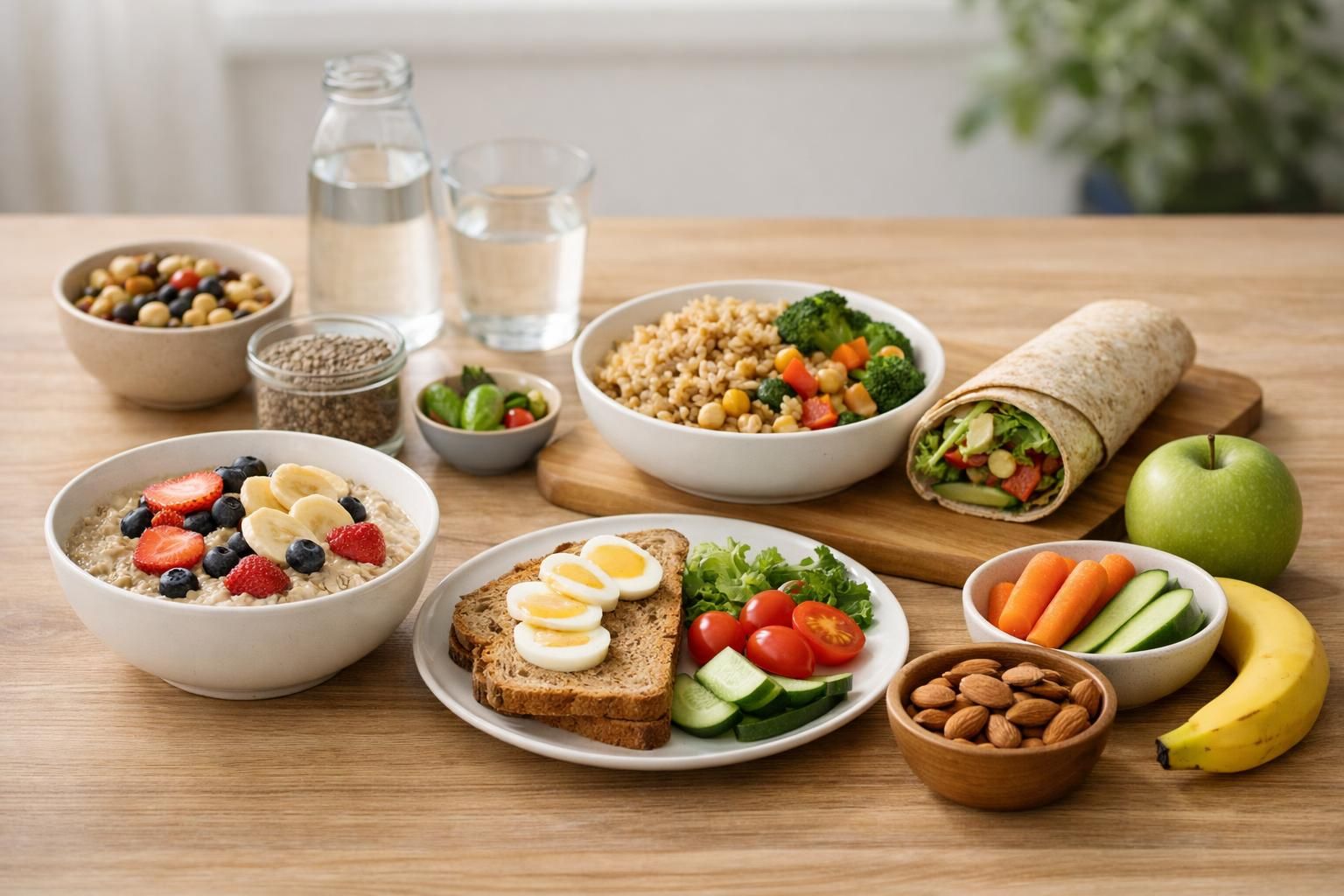
Adding more fibre does not need to mean changing every meal at once. A practical starting point is to swap one familiar food for a fibre-rich alternative, then build from there. For adults, the NHS advises aiming for 30g of fibre a day as part of a healthy, balanced diet.
Fibre-rich foods can support digestion and help prevent constipation. Eating plenty of fibre is also associated with lower risks of heart disease, stroke, type 2 diabetes and bowel cancer. Variety matters: rather than depending on one food, include different sources across meals and snacks. Read more in the NHS guide to getting more fibre into your diet.
Start with one breakfast swap
Breakfast is an easy place to begin. If refined cereal is your usual choice, consider porridge topped with fruit on some mornings. Oats and fruit both contribute fibre, while changing the topping can keep breakfast varied.
Another option is wholemeal toast alongside fruit instead of white toast alone. You do not need to make every breakfast identical; alternating between porridge, wholegrain cereals and wholemeal bread can bring in a wider range of fibre sources.
Build a more fibre-friendly lunch
At home, in the office or at a café, look for one addition rather than trying to redesign the whole meal. Where it is available, choose brown rice in place of white rice. With a rice, noodle or curry meal, consider adding a vegetable side or a dish containing beans, lentils or chickpeas.
Wholewheat pasta, wholegrain breads and cereals, and potatoes eaten with their skins are other useful options. These choices can fit ordinary lunches without requiring a special menu.
Think beyond main meals
Fibre can also come from snacks. Before a commute or busy workday, packing fresh fruit, vegetable sticks, unsalted nuts or seeds may be a convenient alternative to treating fibre as something reserved for breakfast, lunch and dinner. Keeping a few suitable options at home or at work can make the choice easier when time is short.
Use labels as a helpful guide
For pre-packaged foods, check the nutrition label for fibre content. The NHS describes a food with 6g or more fibre per 100g as high in fibre. However, figures vary with ingredients, preparation and portion size, so labels and meal ideas are guides rather than exact promises.
A small swap today, followed by another when it suits your routine, can help make fibre variety a regular part of eating well. For more general health information, visit ISAW Medical.
This article is for general education and does not replace personalised advice from a qualified healthcare professional.