

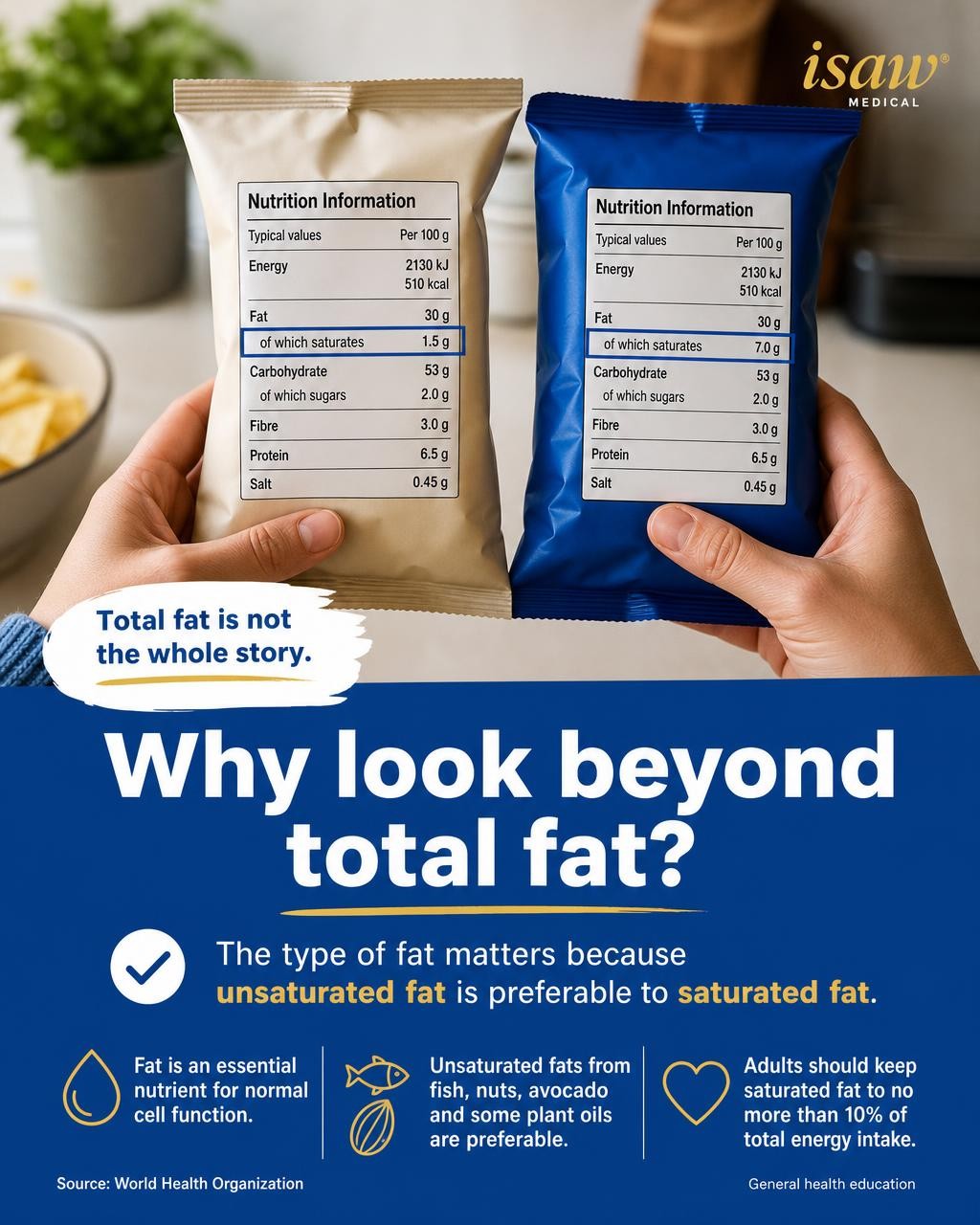
Two snack packets show similar total fat. Look at saturated fat too: the type of fat matters because unsaturated fat is preferable to saturated fat.
Why look beyond total fat?
Your body needs some fat for normal cell function, so “total fat” is not the whole story. When comparing packets, the total amount may look alike while the kind of fat can be different.
Think of two routes with the same distance. The distance is useful, but it is not the only detail that helps you choose. In the same way, total fat is one part of a food label; saturated fat gives another helpful clue.
Fat types are not all the same
The World Health Organization’s Healthy diet guidance says that unsaturated fats are preferable to saturated fat. Unsaturated fats are found in foods such as fish, nuts, avocado and some plant oils.
Saturated fat is found in foods such as fatty meat, butter, palm oil, coconut oil, cream and cheese. For adults, WHO recommends keeping saturated fat to no more than 10% of total energy intake.
One simple label conversation
When two packets have similar total-fat numbers, compare the saturated-fat line as well. This does not make one packet the whole diet. It is simply a clearer way to notice that fat quality matters alongside the total.
ISAW makes everyday health knowledge easier to understand. Learn more at ISAW Medical.
This article is for general education and does not replace personalised advice from a qualified healthcare professional.