

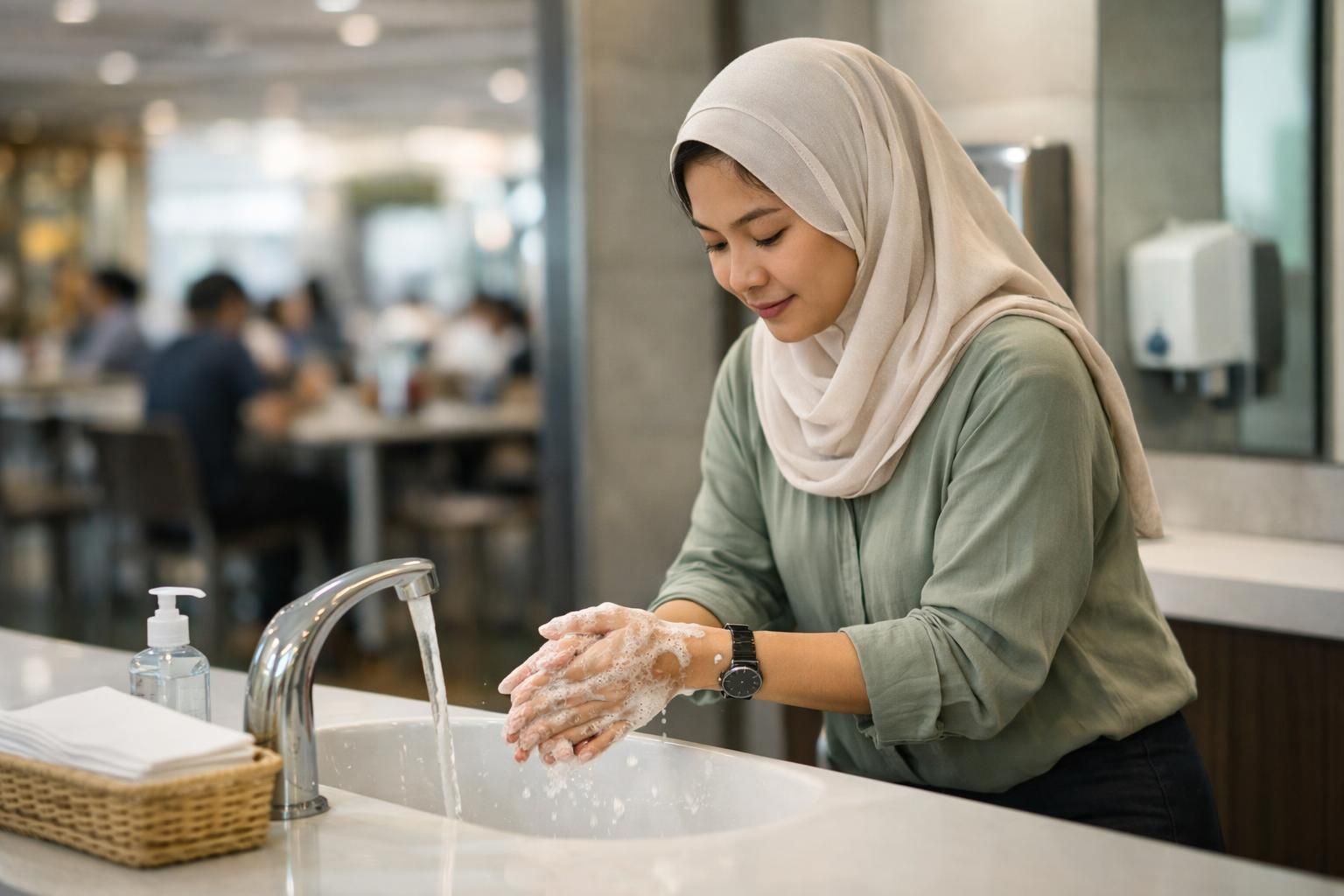
Handwashing is a simple everyday habit that can help protect you and others from illnesses such as food poisoning, flu and diarrhoea. It also helps remove dirt, viruses and bacteria from your hands, limiting the chance of passing them to other people or onto frequently touched objects.
Making handwashing part of familiar routines can be more practical than relying on memory alone. Link it to moments that already happen in your day: arriving at work, sitting down to eat or finishing food preparation at home.
A straightforward handwashing routine
The NHS advises washing hands for around 20 seconds, which is roughly the time needed to sing “Happy Birthday” twice. NHS handwashing guidance outlines these useful steps:
- Wet your hands with water.
- Apply enough soap to cover both hands.
- Rub your hands together thoroughly.
- Dry them completely using a disposable towel.
- Where available, use the towel to turn off the tap.
Build prompts into daily life
Before food and after raw ingredients
Wash your hands before eating or handling food. At a food court, for example, you might make handwashing part of choosing a table before opening a packed nasi lemak. At home, wash before and after handling raw food, including meat and vegetables. After preparing raw chicken, pause to wash your hands before touching the fridge handle, phone or serving dishes.
After the toilet and respiratory hygiene
Wash after using the toilet, and after coughing, sneezing or blowing your nose. These moments are easy to overlook when the day is busy, but a nearby sink and soap make a useful reset before returning to shared desks, household tasks or meals.
On the move and at work
After a commute, soap and water may not be immediately nearby. Keeping alcohol-based hand sanitiser in a work bag is an option when a sink is unavailable, then washing with soap and water when possible. This can also be useful before eating at your desk or handling shared items.
Do not overlook cuts, animals and shared spaces
Wash your hands after touching animals and before and after treating a cut or wound. At home or in the workplace, consider washing after tasks that involve close contact with commonly handled surfaces, particularly before preparing food or touching your face.
Small, repeatable habits are often the easiest to maintain. Place soap where it is easy to reach, keep towels available where appropriate and use everyday events as reminders to clean your hands properly.
For more general health information, visit ISAW Medical.
This article is for general education and does not replace personalised advice from a qualified healthcare professional.