

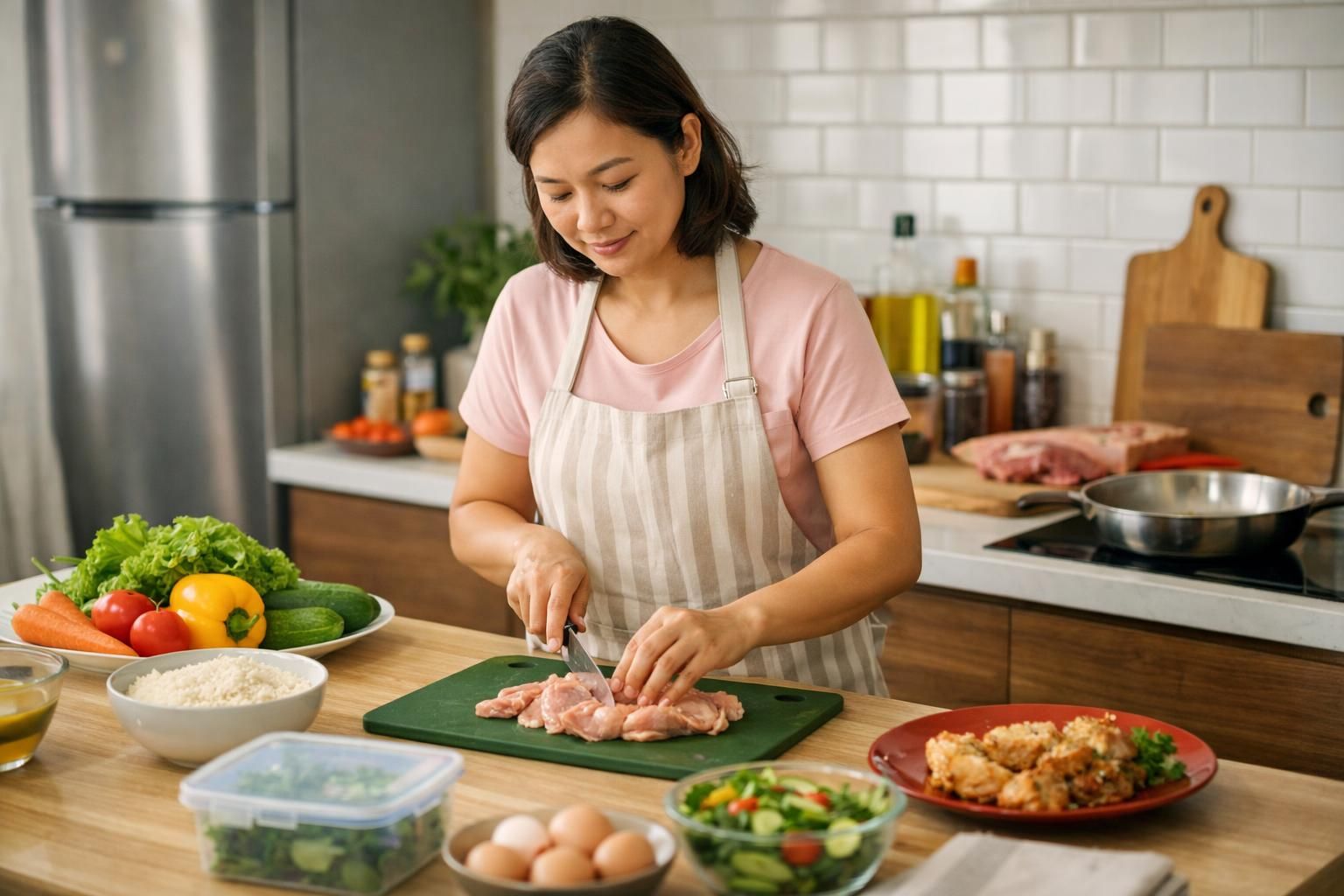
Preparing meals at home can be both enjoyable and practical. A few simple routines can help make food handling part of your everyday kitchen flow, from unpacking market purchases to putting away leftovers. The World Health Organization outlines five key principles for safer food handling: keep clean, separate raw and cooked foods, cook thoroughly, keep food at safe temperatures, and use safe water and raw materials. Read the WHO Five Keys to Safer Food for further guidance.
A simple five-step checklist
1. Keep hands, surfaces and equipment clean
Wash your hands before handling food and regularly while preparing it. Clean worktops, utensils and equipment as you go. It is also sensible to keep kitchen areas protected from pests and animals. These small steps may fit naturally into washing up after each stage of cooking.
2. Separate raw and cooked foods
Keep raw meat, poultry and seafood away from foods that are ready to eat. Consider using separate chopping boards and utensils, or wash them thoroughly between tasks. For example, prepare raw chicken on one board, then wash the board and knife before slicing cucumber or arranging cooked food.
3. Cook and reheat food thoroughly
Thorough cooking is especially important for meat, poultry, eggs and seafood. The same principle applies when reheating cooked food. When preparing a family dinner or packing a work lunch, allow enough time for food to be cooked or reheated properly rather than rushing the final step.
4. Store food at safe temperatures
Avoid leaving cooked food at room temperature for more than two hours. Refrigerate cooked and perishable foods promptly, and do not thaw frozen food at room temperature. After dinner, you might divide leftover soup or rice into clean containers and place them in the refrigerator rather than leaving them on the table until bedtime.
5. Start with safe water and raw materials
Choose fresh ingredients and use safe water. Wash fruit and vegetables that will be eaten raw. On the journey home from the market or shop, keep raw seafood or meat packaged separately from ready-to-eat items in your shopping bag. This can make unpacking and meal preparation more orderly too.
Make food safety an everyday habit
These routines do not need to make home cooking complicated. A clean preparation area, sensible separation, thorough cooking and prompt storage can become familiar parts of preparing daily meals. For more general health information, visit ISAW Medical.
This article is for general education and does not replace personalised advice from a qualified healthcare professional.