

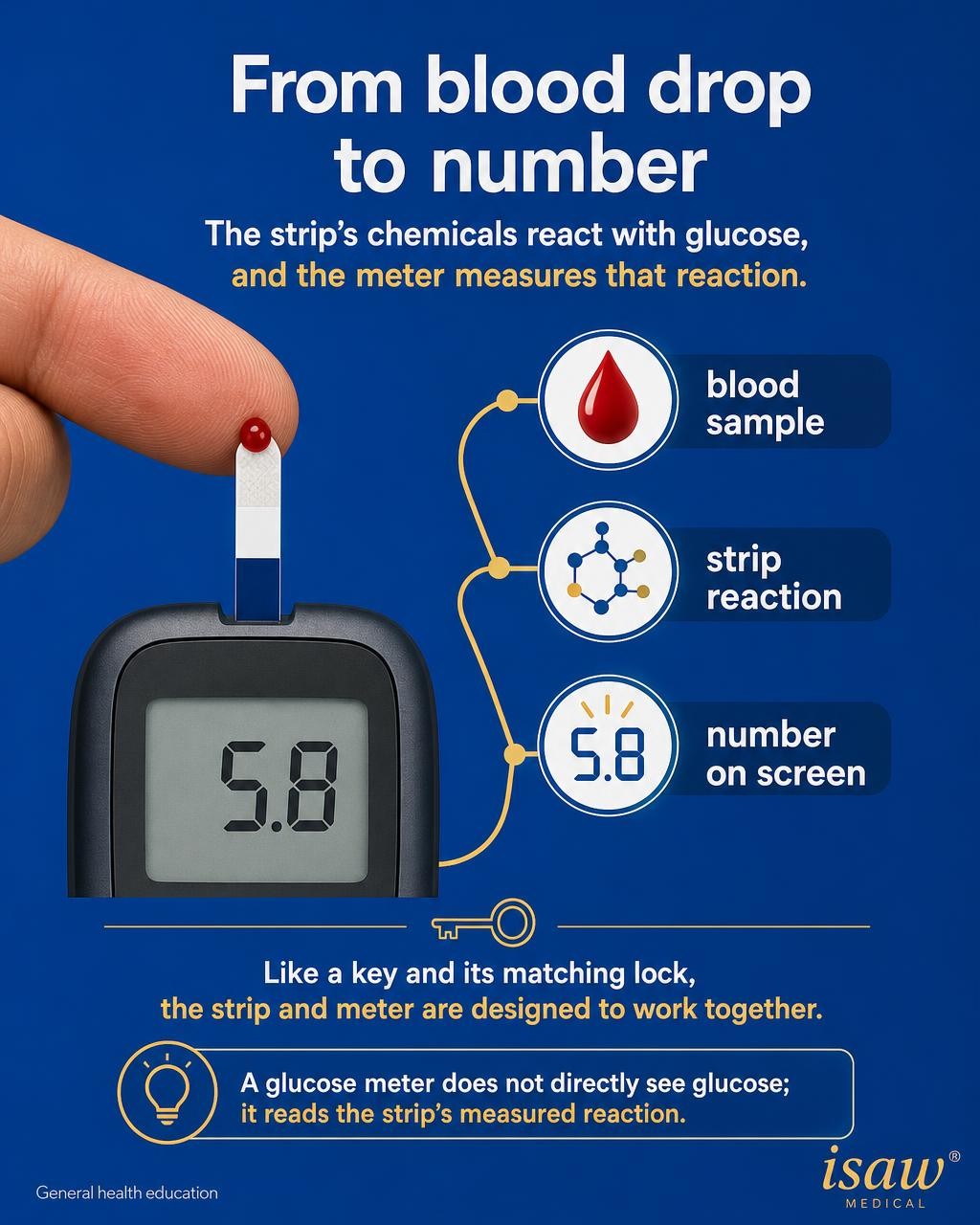
You place a finger-prick blood drop at the end of a strip and watch the meter display a number. That small strip does more than hold your blood drop: its chemicals react with glucose, and the meter measures that reaction.
From blood drop to number
Think of this as a simple mindmap with one central idea: the meter does not directly see glucose. It reads the strip's measured reaction and turns it into a result on the screen.
1. Blood sample
A home blood glucose testing system includes a handheld meter and disposable test strips. A small blood sample goes onto the strip.
2. Strip reaction
The strip contains chemicals that react with glucose in the blood sample. This reaction is the important step between the blood drop and the displayed result.
3. Number on screen
The meter measures the strip's reaction using electricity or light, then shows the result as a number. The FDA's Blood Glucose Monitoring Devices page explains these systems use a meter and test strips to measure glucose in a small blood sample.
Like a key and its matching lock, the strip and meter are designed to work together. This comparison describes their matching roles, not the chemical reaction itself.
Takeaway: A glucose meter does not directly see glucose; it reads the strip's measured reaction.
ISAW makes everyday health knowledge easier to understand. Learn more at ISAW Medical.
This article is for general education and does not replace personalised advice from a qualified healthcare professional.