

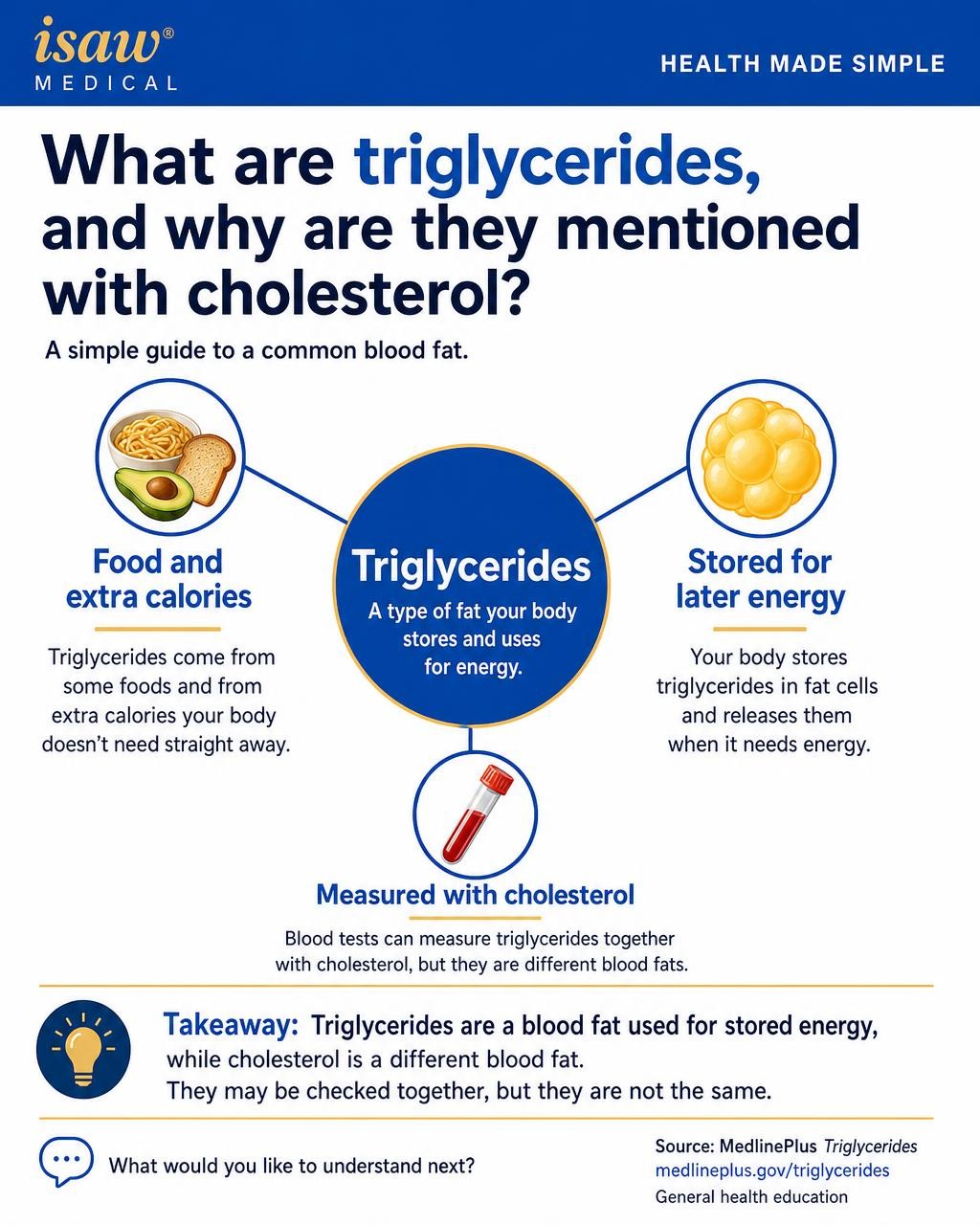
What are triglycerides, and why are they mentioned with cholesterol? Triglycerides are a type of fat your body uses and stores for energy. They are not cholesterol, but both are fats found in the blood and may be measured in the same blood test.
Think of triglycerides as spare fuel kept for later. This is a simple comparison: the body handles foods and fats through several connected processes, not one storage box.
Triglycerides: the central idea
Triglycerides are blood fats that can be stored and used when the body needs energy.
Food and extra calories
Triglycerides come from some foods. They can also come from extra calories that the body does not need straight away.
Stored for later energy
The body stores triglycerides in fat cells. When it needs energy, it can release them from storage.
Measured with cholesterol
A blood test can measure triglycerides together with cholesterol. A high triglyceride level can raise the risk of heart disease.
You can read more in MedlinePlus' Triglycerides overview.
Triglycerides and cholesterol are not the same
Triglycerides are mainly used as stored energy. Cholesterol is a different type of blood fat. They are mentioned together because a blood test may check both, not because they are the same thing.
ISAW makes everyday health knowledge easier to understand. Visit ISAW Medical for more simple health information.
This article is for general education and does not replace personalised advice from a qualified healthcare professional.