

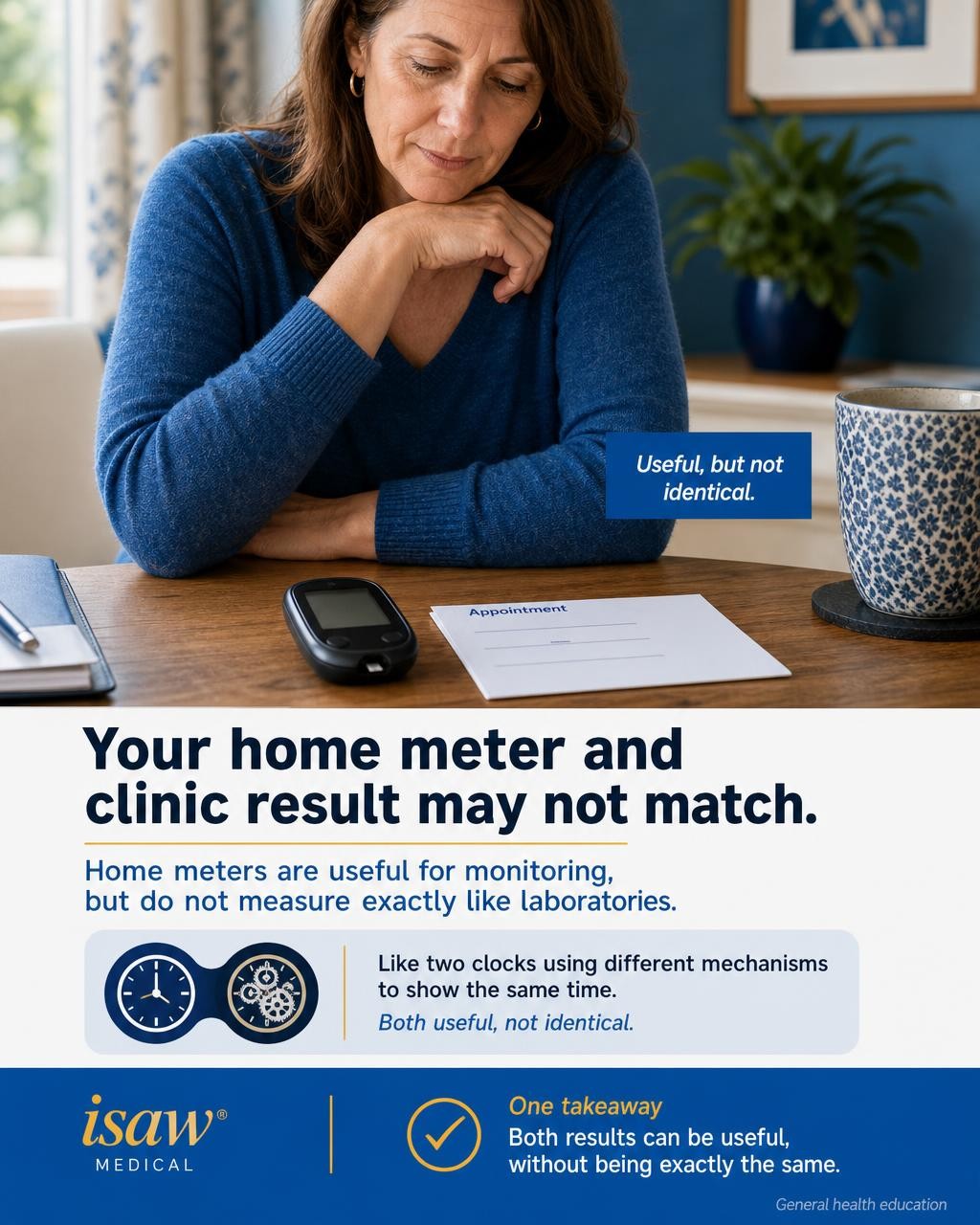
Your home meter and clinic result may not match exactly. Home meters are useful for monitoring, but they do not measure blood sugar in exactly the same way as laboratories.
Like two clocks checking the same time
Comparison: A home meter and a laboratory test are like two clocks using different mechanisms to check the same time. Both can be useful, but they may not match exactly.
The FDA explains that home blood glucose meters are generally reliable for day-to-day monitoring, but their technology is not as accurate as laboratory testing in a hospital or doctor’s office.
Two reasons the results can differ
1. The testing method is different
A home meter is designed for regular checks using a small blood sample. A laboratory uses a different method. That difference can mean the two results are not identical.
2. How the meter is used matters
Wash and dry your hands, use the correct strips for your meter, and follow that meter’s instructions. How the meter and strips are handled can affect a result.
The limit of the clock comparison
Blood testing involves more than the device. The sample and the testing method also matter, so the comparison is only a simple way to understand why two useful results may differ.
If you want to compare your meter with a laboratory blood glucose test, a health professional can check your testing technique.
ISAW makes everyday health knowledge easier to understand. Learn more at ISAW Medical.
This article is for general education and does not replace personalised advice from a qualified healthcare professional.