

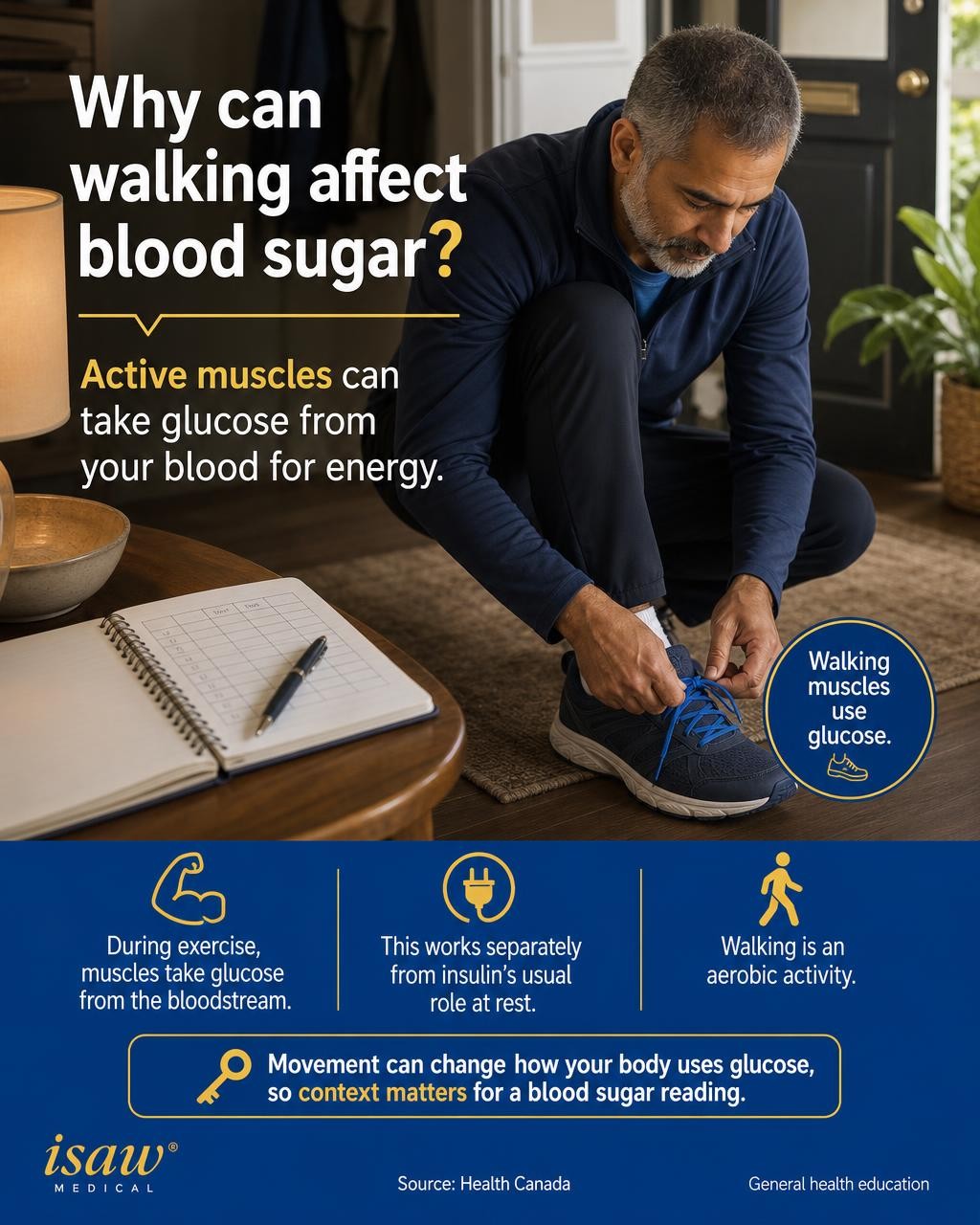
After dinner, you put on your walking shoes and glance at a blood sugar log. Active muscles can take glucose from your blood for energy while you exercise.
Why can a walk affect a blood sugar reading?
Walking is an aerobic activity. As you walk, your muscles contract and need fuel. Those working muscles can take glucose from the bloodstream, which is one reason movement can affect a later blood sugar reading.
This happens separately from insulin’s usual role in helping the body handle glucose at rest. Think of working muscles like appliances drawing fuel from a power supply. It is a simple comparison for a more complex body process.
One useful takeaway
Movement can change how your body uses glucose, so the context around a blood sugar reading matters. One reading on its own is not a diagnosis.
Learn more from the National Institute of Diabetes and Digestive and Kidney Diseases: Prescribing Exercise for Almost Anyone.
ISAW makes everyday health knowledge easier to understand. Visit ISAW Medical.
This article is for general education and does not replace personalised advice from a qualified healthcare professional.