

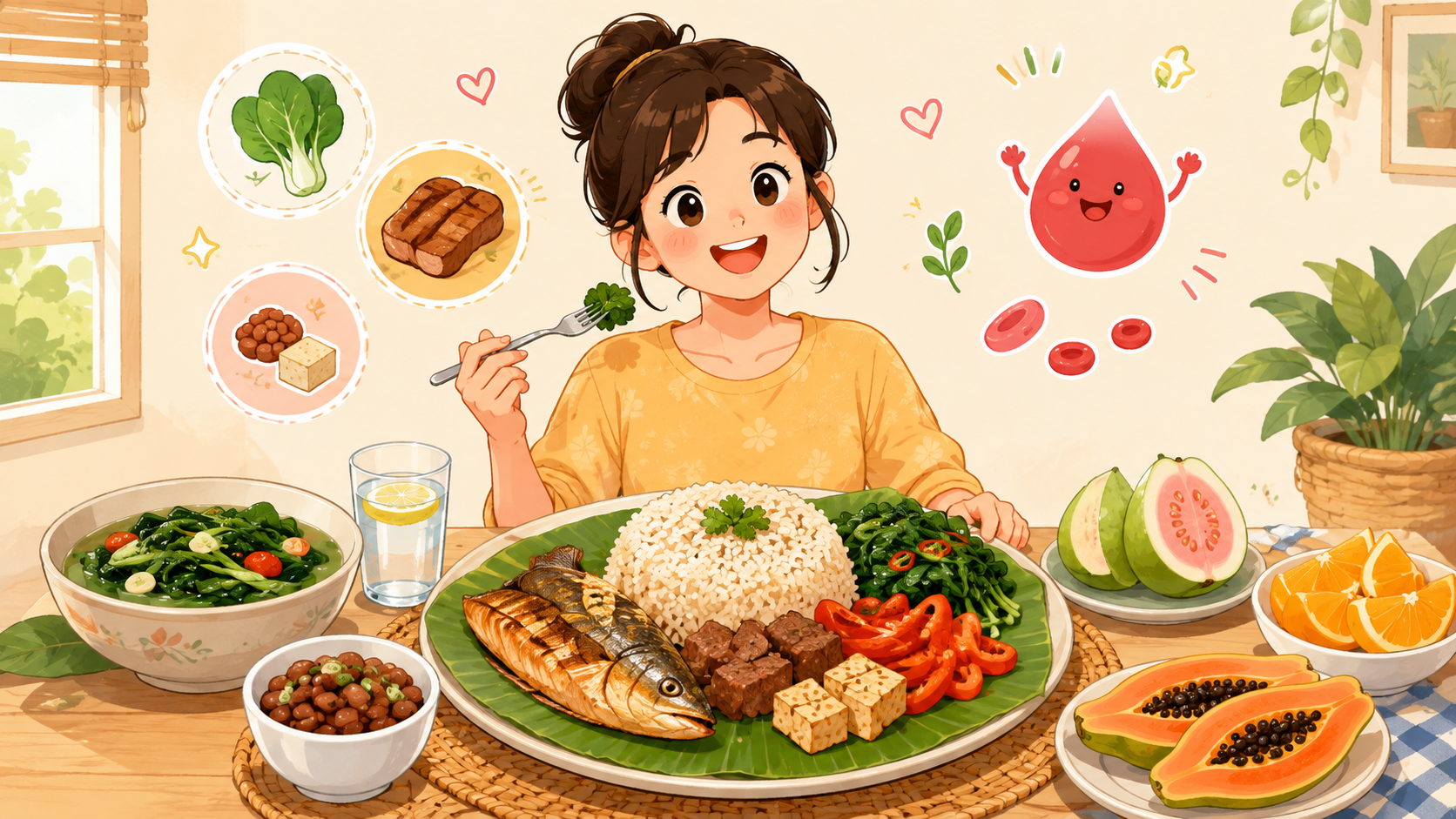
Hemoglobin is the protein in red blood cells that helps carry oxygen around the body. Iron is one of the nutrients needed to make hemoglobin, but eating “more iron” does not simply mean eating large amounts of one particular food.
A better approach is to build varied meals that provide iron together with other nutrients that help your body use it. For Malaysians, this can be done with many familiar everyday foods without turning every meal into a special diet.
There Are Two Main Types of Iron in Food
Iron from food comes in different forms. Iron from meat, poultry and seafood is generally absorbed more readily by the body. Plant foods such as beans, lentils, tofu, tempeh, nuts, fortified grains and dark-green leafy vegetables also provide iron, although absorption can be influenced more by the other foods and drinks eaten at the same time.
This does not mean that everyone needs to eat red meat. A varied diet can combine animal and plant sources according to personal preference, culture, budget and health needs.
Pair Plant-Based Iron With Vitamin C
Vitamin C can improve the absorption of non-haem iron, the form found mainly in plant foods. A simple way to use this at home is to include a vitamin-C-rich fruit or vegetable with an iron-containing meal.
For example, a meal containing dhal, tofu, tempeh or leafy vegetables can be paired with tomatoes, capsicum, guava, papaya, orange or other fruits and vegetables.
You do not need complicated combinations. Think of it as adding colour to the plate.
A Malaysian Plate Can Already Be a Good Starting Point
Malaysia's Ministry of Health promotes the Suku-Suku-Separuh or Quarter-Quarter-Half concept: roughly one quarter of the plate from rice, noodles, bread, grains or tubers; one quarter from fish, chicken, meat or legumes; and half from vegetables, with fruit added to the meal.
That basic structure can also work well when you are trying to build an iron-conscious meal.
Three simple meal ideas
- Rice + grilled fish or lean meat + kangkung or sawi + guava. The protein portion contributes iron, while the vegetables and fruit add variety and vitamin C.
- Dhal + tofu or tempeh + tomato/capsicum vegetables + orange or papaya. This is a useful plant-forward option that combines iron-containing foods with vitamin-C-rich produce.
- Rice + chicken + mixed dark-green vegetables + fresh fruit. A familiar everyday meal can be nutritionally useful without requiring special “health foods”.
The exact portion you need depends on age, activity, health status and individual nutritional requirements, so these examples are meal-building ideas rather than fixed prescriptions.
What About Tea and Coffee?
Tea and coffee contain compounds that can reduce the absorption of non-haem iron when consumed with an iron-rich meal.
For most people eating a varied diet, this does not mean giving up kopi or teh. If maintaining iron intake is a particular concern, consider enjoying tea or coffee separately from your main iron-focused meal rather than drinking it together with the meal.
Calcium can also interact with iron absorption. If a healthcare professional has prescribed both iron and calcium supplements, ask about the most appropriate timing rather than taking everything together automatically.
Low Hemoglobin Does Not Always Mean “Eat More Iron”
This is an important point. Anaemia can have many causes. Iron deficiency is a common nutritional cause, but low hemoglobin can also be associated with deficiencies of vitamin B12, folate or other nutrients, blood loss, chronic illness, inflammation, infections and inherited blood conditions such as thalassaemia.
Because of this, repeatedly low hemoglobin readings should not automatically be treated by buying an iron supplement.
A healthcare professional may need to consider your symptoms, medical history and additional laboratory tests before deciding what is causing the low hemoglobin.
Be Careful With Iron Supplements
Iron supplements can be useful when iron deficiency has been identified or when a healthcare professional recommends supplementation for a particular situation. However, taking extra iron “just in case” is not appropriate for everyone.
Too much iron can be harmful, and supplementation may be unnecessary when low hemoglobin has another cause. Pregnancy, heavy menstrual bleeding, gastrointestinal problems and some inherited blood disorders also require individual medical assessment.
When Should You Seek Medical Advice?
Symptoms of anaemia can be quite non-specific. They may include unusual tiredness, weakness, dizziness or light-headedness, headaches and shortness of breath, particularly with exertion.
If these symptoms are persistent, worsening or accompanied by an unexpectedly low hemoglobin result, arrange an appropriate medical assessment rather than relying only on dietary changes.
Home Monitoring: Look at the Bigger Picture
Home health monitoring can help people become more aware of their health information, but one number should always be interpreted in context.
A hemoglobin result is not a complete diagnosis by itself. When a reading appears unusual, repeat testing according to the device instructions if appropriate, consider whether the sample was collected correctly, and seek professional assessment when results remain abnormal or symptoms are present.
The same principle applies to blood glucose, cholesterol and other home-monitoring measurements: trends and context usually tell us more than reacting to a single number.
The Takeaway
Supporting healthy hemoglobin does not require an exotic diet. Start with varied everyday foods: include an appropriate protein source, add legumes or leafy vegetables regularly, include vitamin-C-rich fruits and vegetables, and pay attention to what you drink with iron-focused meals.
Most importantly, remember that nutrition is only one part of the picture. If hemoglobin is repeatedly low, finding the reason matters more than simply adding more iron.
ISAW Health Note: This article is for general health education and does not diagnose anaemia, iron deficiency or any other medical condition. Individual nutritional needs vary. If you have persistent symptoms, abnormal readings, heavy menstrual bleeding, are pregnant, or have a known blood disorder, consult an appropriate healthcare professional.