

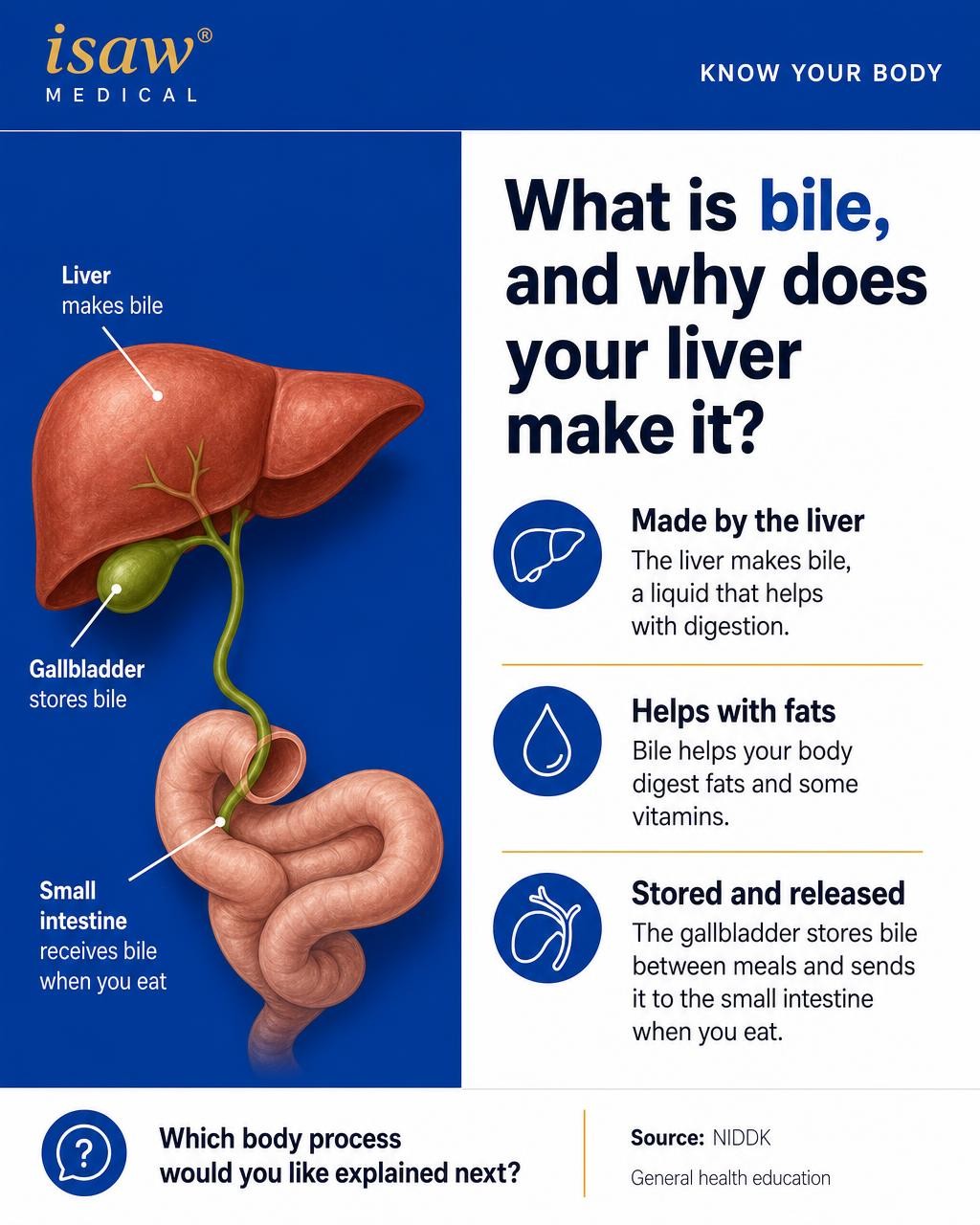
What is bile, and why does your liver make it? Bile is a digestive liquid made by the liver. Your body uses it to help deal with fats in food after a meal.
What does “bile” mean?
Bile is a normal liquid that is part of digestion. Digestion is how your body breaks down food and uses what it needs.
The liver is one of the organs that helps with digestion, and making bile is one of its jobs. Your Digestive System & How it Works - NIDDK explains this route through the digestive system.
Why your body makes bile
- The liver makes it. The liver produces bile as part of its role in digestion.
- It helps with fats. Bile helps your body digest fats in food. It also helps with some vitamins.
- It is released after a meal. Between meals, the gallbladder stores bile. When you eat, the gallbladder sends bile through small tubes into the small intestine, where food is being digested.
One useful thing to remember
Bile follows a simple route: the liver makes it, the gallbladder stores it, and it travels to the small intestine when food arrives.
ISAW makes everyday health knowledge easier to understand. Learn more at ISAW Medical.
This article is for general education and does not replace personalised advice from a qualified healthcare professional.