

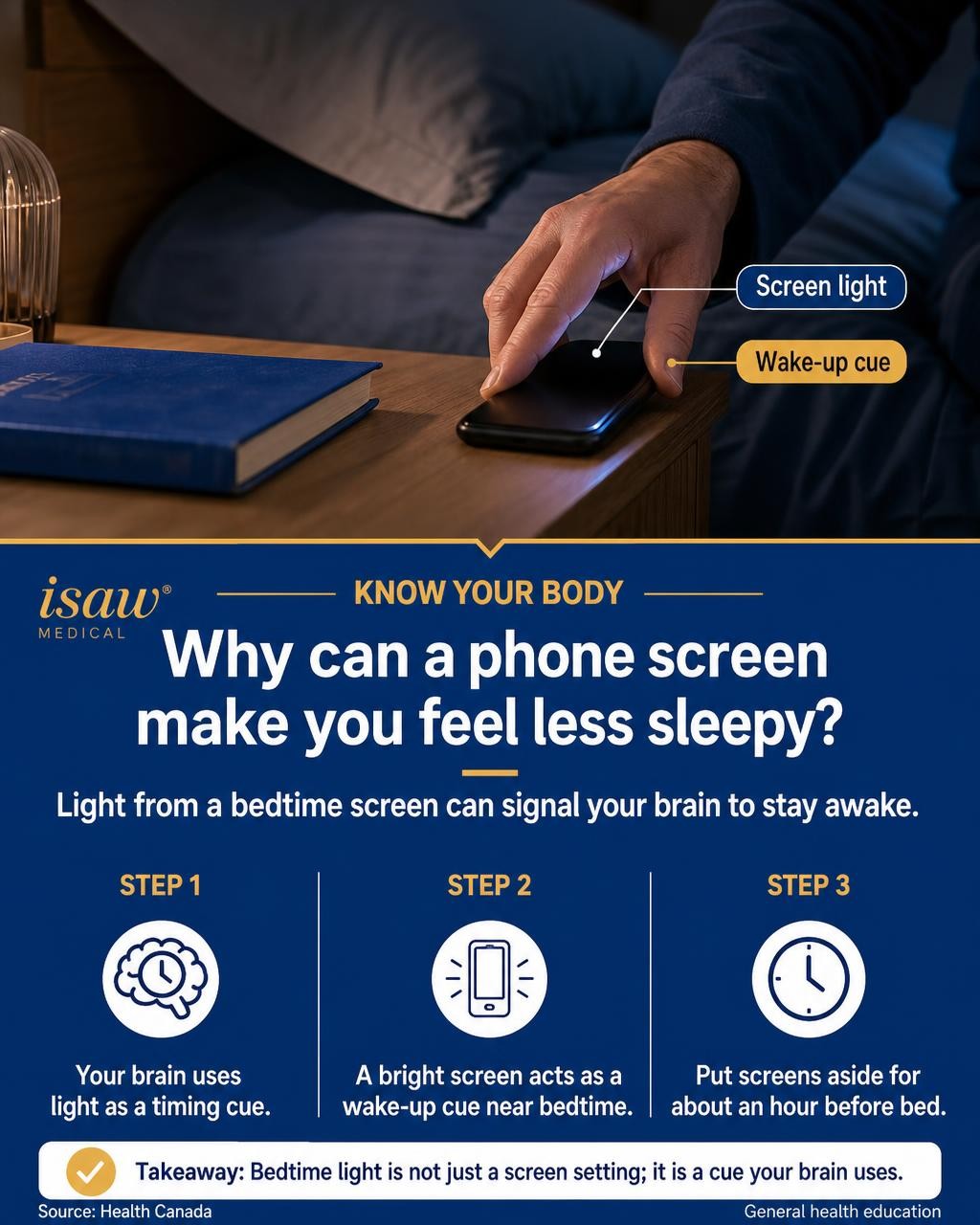
Scrolling in bed after turning off the room light can wake your brain up. A bright phone screen can act as a wake-up cue, making it harder to feel ready for sleep.
Why this happens
Your brain has an internal clock that helps set times for being awake and for feeling ready to sleep. Light and darkness help shape that timing. In a dark bedroom, the glow from a phone can send a different signal: it is still time to be alert.
Three simple steps
1. Notice light as a timing cue
Think of your body clock like a clock taking its cue from light. This is only a simple comparison: sleepiness is also affected by how long you have been awake and by your routines.
2. Link the screen glow to wakefulness
When a bright screen is close to your face at bedtime, its artificial light can give your brain a false wakefulness cue. It is not just a screen setting; it is a cue your brain uses.
3. Put screens aside before bed
The NIH Healthy Sleep guidance advises avoiding phone, computer and TV screens for about an hour before bed. Putting your phone face-down on the bedside table and choosing a non-screen activity can support a calmer wind-down.
ISAW makes everyday health knowledge easier to understand. Learn more at ISAW Medical.
This article is for general education and does not replace personalised advice from a qualified healthcare professional.