

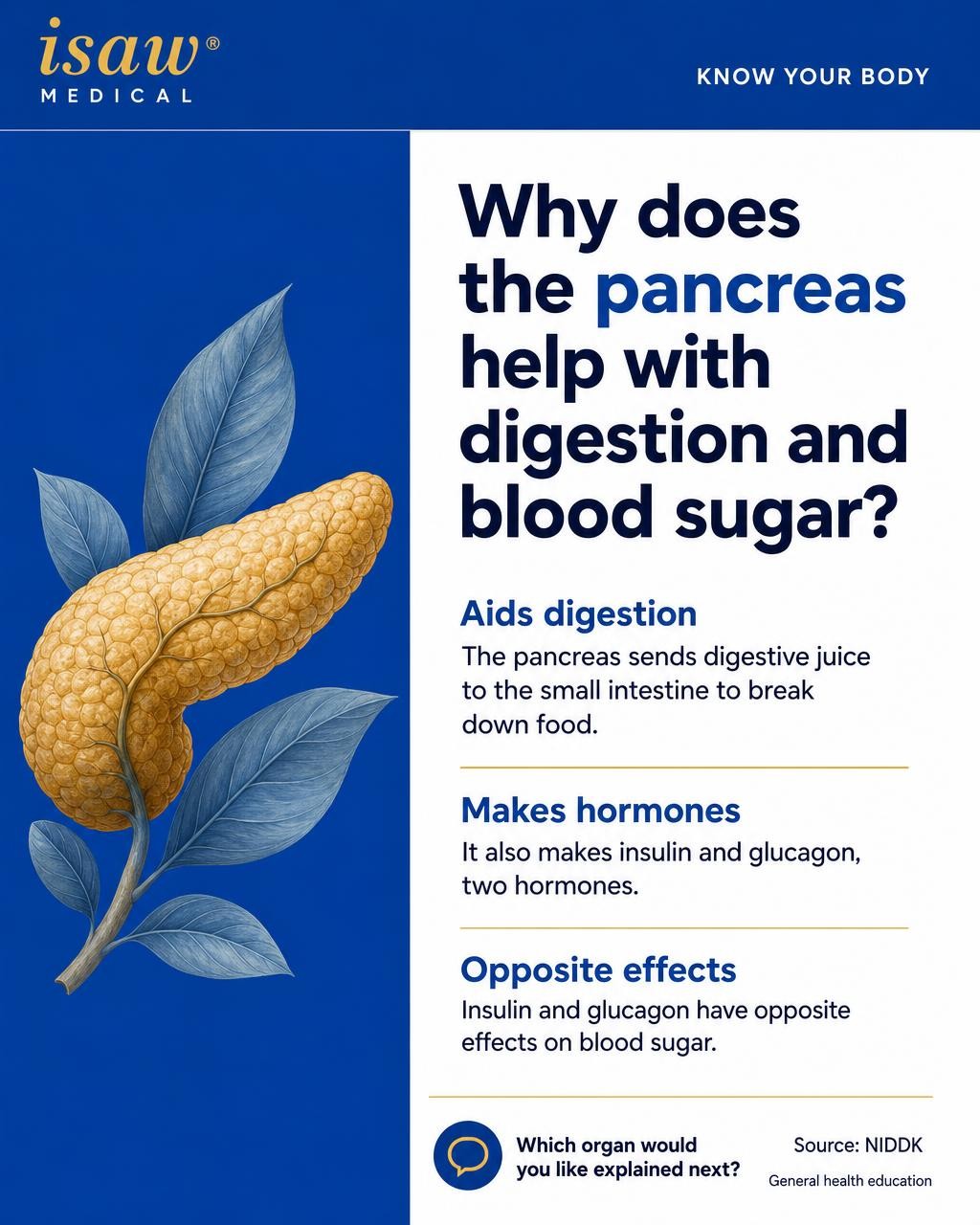
Why does the pancreas matter both after a meal and between meals? It has two connected everyday jobs: helping to digest food and helping to manage blood sugar.
One organ, two everyday tasks
The pancreas is a small organ behind the stomach. After you eat, it sends pancreatic juice into the small intestine, where food mixes with digestive juices.
This juice contains enzymes. Enzymes are substances that help break food into smaller parts. Pancreatic enzymes help break down carbohydrates, fats and proteins, so the body can absorb them.
You can read more about this process in the National Institute of Diabetes and Digestive and Kidney Diseases guide, Your Digestive System & How it Works.
Helping manage blood sugar
The pancreas also makes hormones, which are chemical messengers in the body. Two of these are insulin and glucagon. They have opposite effects on blood glucose, another name for blood sugar, and help manage it.
This is why the pancreas matters beyond the meal itself. Its work includes both helping the body deal with food in the gut and helping manage blood sugar through hormones.
A simple way to picture it
Think of the pancreas like one back-of-house team with two tasks. One task prepares food so the body can absorb it. The other helps manage how blood sugar moves and is used. This is only a simple comparison: the real process also involves the gut, liver, blood and other body systems.
One useful thing to remember
The pancreas is not only linked with blood sugar. It also has a normal, everyday role in helping the body digest a meal.
ISAW helps make everyday health knowledge easier to understand. Visit ISAW Medical for more simple health information.
This article is for general education and does not replace personalised advice from a qualified healthcare professional.