

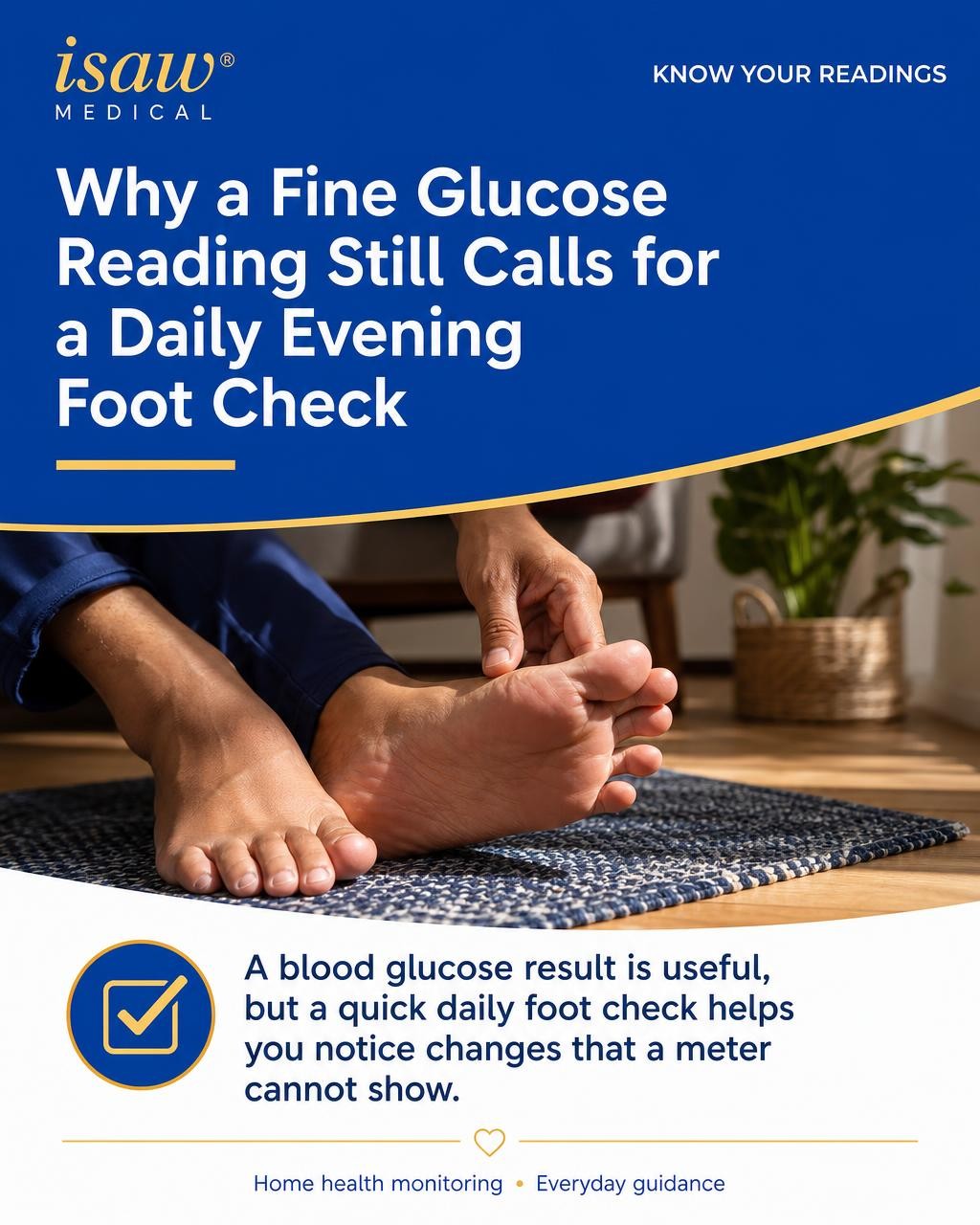
Have you ever looked at a reassuring home blood glucose reading and thought, “My diabetes self-care is covered for today”? It is understandable—but your meter cannot show what is happening on your feet.
A useful reading, but a separate routine
Blood glucose monitoring is an important part of diabetes self-care, but it does not replace a daily foot check. Over time, diabetes can affect nerves in the feet and reduce feeling, so a small injury or irritation may go unnoticed. Diabetes can also reduce blood flow to the feet, which may make healing more difficult.
The NIDDK guide to Diabetes & Foot Problems advises checking your feet every day, including between the toes. Taking off your shoes in the evening can be a simple, memorable prompt.
Your simple evening foot checklist
- Look over the tops, sides and heels of both feet.
- Check the soles; use a mirror if you cannot see them easily.
- Look between every toe.
- Watch for cuts, sores, red areas, swelling or blisters.
- Notice ingrown toenails, corns, calluses or athlete’s foot.
- Check for areas that feel unusually warm.
- Ask another person to help if bending or seeing your feet is difficult.
Build the check into ordinary moments
These are practical editorial examples, not a substitute for personalised care. After arriving home and removing work shoes, keep a small mirror near the shoe rack to check your soles and between your toes. Before a morning errand, run your hand around the inside of each shoe for pebbles or other objects, then wear clean, well-fitting socks and shoes.
When you record a home blood glucose result, use it as a separate reminder: the reading is not a diagnosis, and it does not inspect your feet. Foot checks and blood glucose management are different protective routines within diabetes self-care. The NIDDK also advises wearing shoes and socks rather than walking barefoot or in socks only.
Keep the habit practical
If you notice a new change during your check, do not ignore it; seek personalised guidance from a qualified healthcare professional. ISAW Medical combines home health monitoring products with practical guidance and support, helping make everyday monitoring routines easier to remember.
This article is for general education and does not replace personalised advice from a qualified healthcare professional.