
Low haemoglobin: what it can and cannot tell you
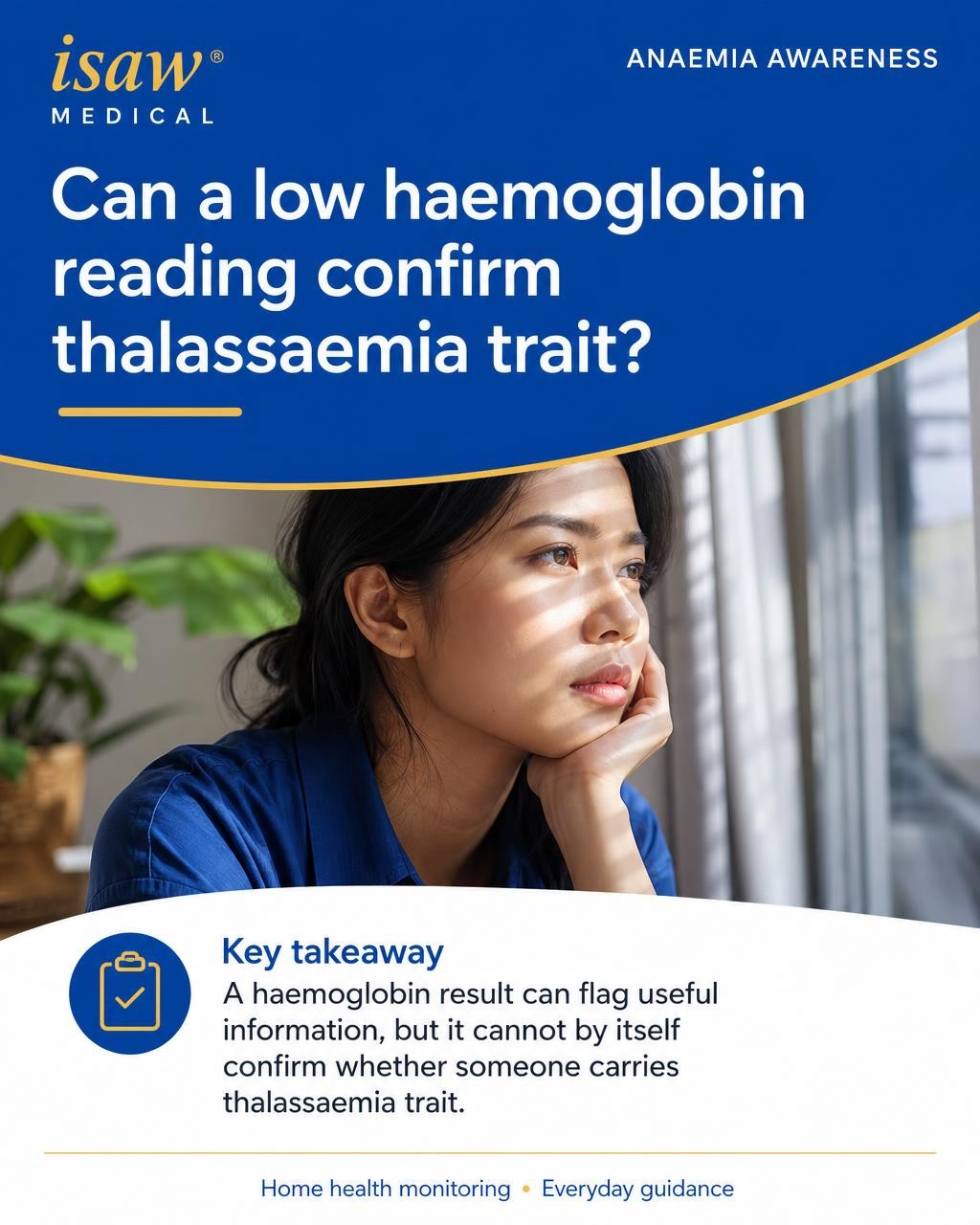
“My haemoglobin is low—does that mean I have thalassaemia trait?” It is an understandable question after a routine health screen, especially when a family-planning conversation is ahead. The prompt answer is: a haemoglobin figure may be useful information, but it is not a carrier-status answer.
This matters for thalassaemia awareness in Malaysia, where clear family conversations can help people decide what to ask about next.
A practical misconception-busting checklist
- A low haemoglobin result does not confirm thalassaemia trait. It is one piece of health information, not a complete carrier test.
- “Anaemia” does not automatically mean iron deficiency. Thalassaemia carriers may sometimes have mild anaemia because their red blood cells are smaller than usual. This is different from iron-deficiency anaemia.
- Carrier status does not mean a person has thalassaemia. A carrier has a gene linked to thalassaemia but does not have thalassaemia themselves.
- Thalassaemia trait has other names. It may also be called thalassaemia minor or being a thalassaemia carrier.
- A separate blood test is needed to establish carrier status. A haemoglobin result alone cannot settle the question.
Who may find this useful?
Anyone can be a carrier. Thalassaemia is more common among people with family origins in several regions, including China and South-East Asia. Knowing whether someone carries the trait can be particularly useful if there is thalassaemia or trait in the family, a partner is known to carry the trait, or a couple are considering having children.
If both partners carry the trait for the main type, beta thalassaemia, there can be implications for their children. The NHS advises discussing this with a genetic counsellor. Read the NHS guidance on Thalassaemia carriers for the source information behind these points.
Three ways to use this checklist
- After a routine screen: Save this reminder that a haemoglobin figure is not a carrier-status answer.
- Before discussing family planning: Write down whether either partner knows of thalassaemia or trait in the family.
- At a family meal: Use the checklist to explain, calmly, why anaemia and iron deficiency are not automatically the same thing.
ISAW Medical combines home health monitoring products with practical guidance and support. When discussing a result, it is helpful to keep the question specific: what does this haemoglobin reading show, and what does it not establish?
This article is for general education and does not replace personalised advice from a qualified healthcare professional.