

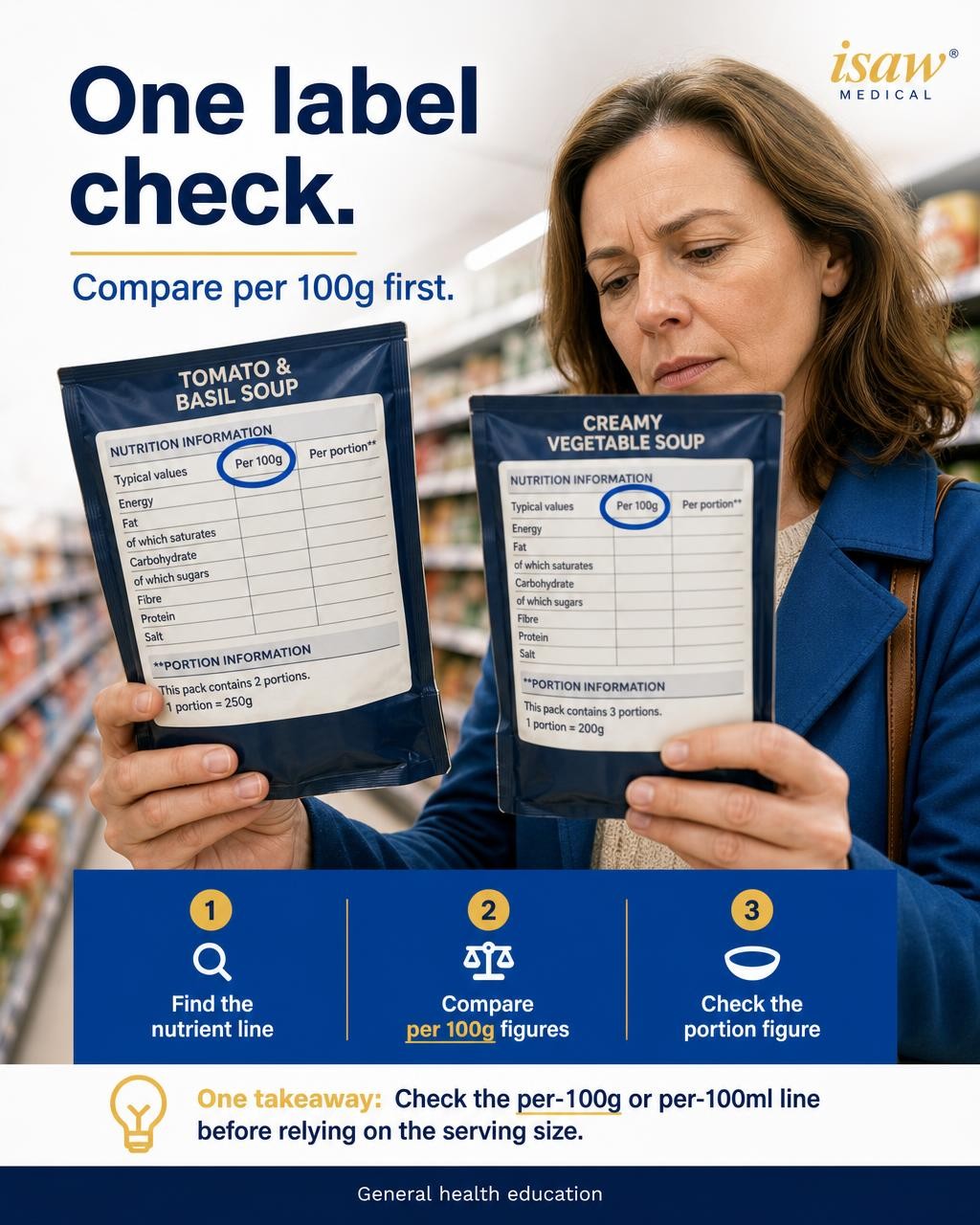
Choosing between two similar soup or cracker packets? Compare the per-100g lines before judging which is lower in salt. Per-100g figures put both foods on the same basis.
Label review: three quick checks
1. Find the nutrient line
Turn the packet over and find the nutrition table. Look for the nutrient you want to compare, such as salt. Nutrition information is commonly shown per 100g or per 100ml, and sometimes per portion.
2. Compare per 100g
Use the per-100g figure for two similar foods. It is like comparing prices using the same unit: it makes the comparison fairer. Front-of-pack information can help you compare similar foods quickly, but the back label gives the per-100g detail.
3. Then check the serving figure
A packet that appears lower in salt per serving may use a smaller serving than another packet. The manufacturer’s portion may also differ from the amount you would actually eat. Check the portion figure after the per-100g comparison to understand your likely intake.
For more on reading nutrition labels, see the NHS guide to Food labels.
Takeaway: When comparing similar packaged foods, check the per-100g or per-100ml line before relying on the serving size.
ISAW Medical makes everyday health knowledge easier to understand.
This article is for general education and does not replace personalised advice from a qualified healthcare professional.