

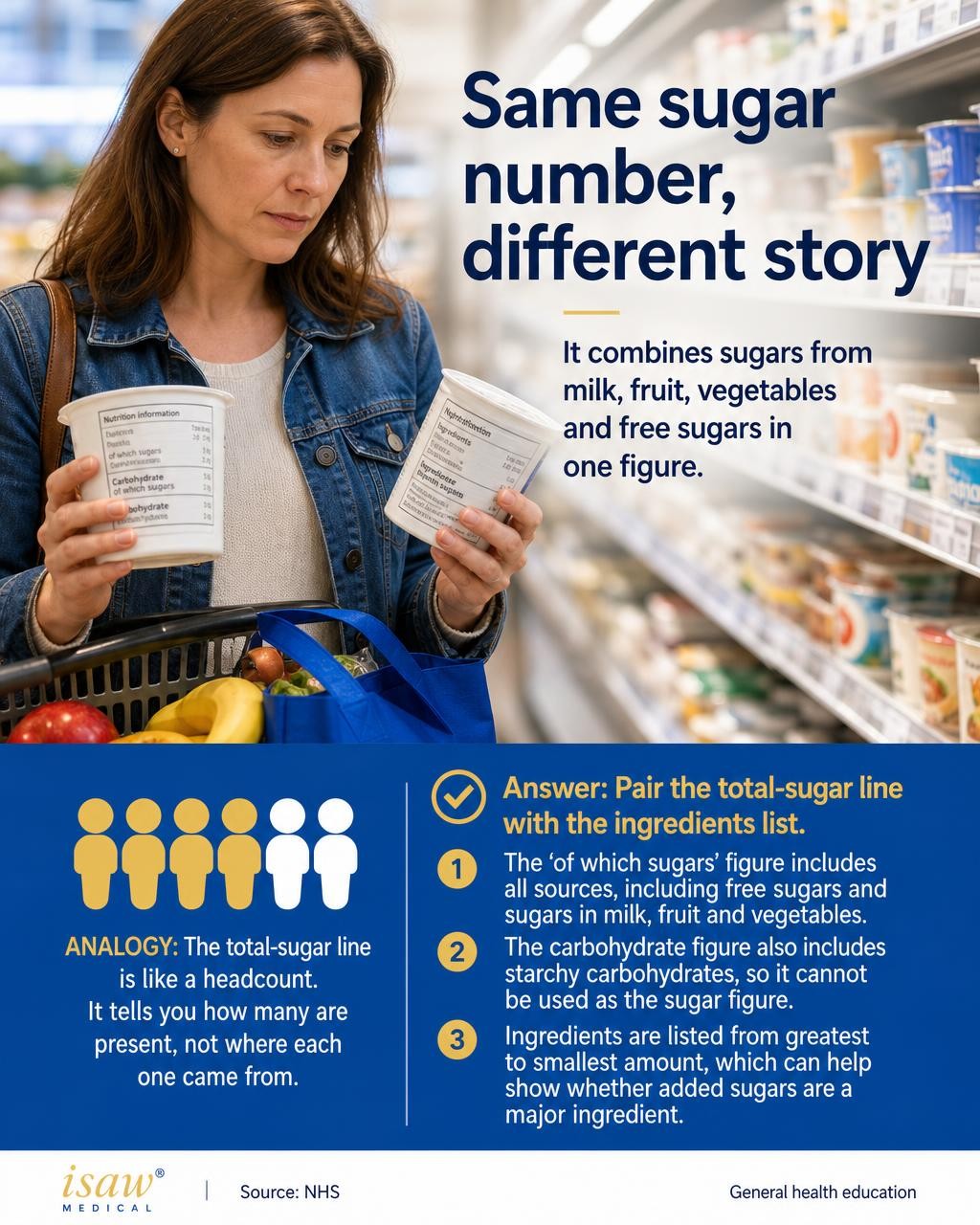
You are comparing two yoghurt pots in the supermarket. Their ‘of which sugars’ numbers look similar. Does that mean they contain the same kind of sugar? Not necessarily: that one figure combines sugars from different sources.
The label’s total headcount
Think of the total-sugar line like a headcount at a gathering. It tells you how many people are there, but not where each person came from. In the same way, the figure includes free sugars as well as sugars naturally present in milk, fruit and vegetables.
This makes the number useful for comparing foods, but it is not the full story. Two yoghurts can have a similar total-sugar figure while getting those sugars from different ingredients.
Do not use carbohydrate as the sugar figure
The carbohydrate line is broader. It includes sugars and starchy carbohydrates, so it cannot be used as the sugar number.
Turn the pot around
For more context, read the ingredients list alongside the total-sugar line. Ingredients are listed from the greatest amount to the smallest amount. This can help you see whether added sugars are a major ingredient.
For more detail, see the NHS: Sugar: the facts.
Takeaway: Total sugar is a useful comparison number, but it does not fully explain a food.
ISAW makes everyday health knowledge easier to understand. Visit ISAW Medical.
This article is for general education and does not replace personalised advice from a qualified healthcare professional.